
Your Voice at Work: 2026 LHATF Member Needs Survey Recap for Healthcare Risk Management Priorities
What are the biggest risks and challenges facing healthcare organizations today? See what LHA Trust Funds members identified as their top priorities this year, from workplace violence and medication safety to emerging risks like AI.
Today, healthcare organizations are navigating a variety of risks, from workplace violence and medication errors to patient falls, clinical documentation challenges, cybersecurity threats, and the responsible use of artificial intelligence. Understanding which issues are most pressing for healthcare providers is an important part of building effective risk management and patient safety strategies.
Each year, the LHA Trust Funds (LHATF) Member Needs Survey allows members to identify the risks they are facing, the resources they need, and the types of education and support that would be most valuable to their organizations. Our 2026 survey highlighted a clear need for practical, accessible resources that help healthcare organizations protect patients, support staff, reduce liability, and strengthen safety across care settings.
What’s more, the survey’s feedback helps inform our approach to healthcare risk management education, consulting, training, toolkits, grants, and other member resources. Here's how their feedback is helping shape what comes next from LHA Trust Funds.
2026 Healthcare Risk Management Priorities for LHATF Members
Using support request data and member feedback responses, we identified the leading safety priorities for member organizations that may require additional guidance for the future. While some concerns, such as medication safety and patient falls, remain longstanding priorities, members also highlighted emerging challenges involving artificial intelligence and cybersecurity.
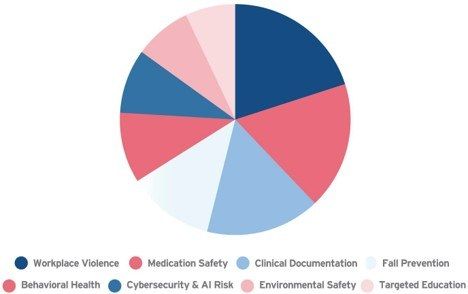
Top Areas of Support
- Workplace Violence: 20%
- Medication Safety: 18%
- Clinical Documentation: 16%
- Fall Prevention: 12%
- Behavioral Health: 10%
- Cybersecurity & AI Risk: 9%
- Environmental Safety: 8%
- Targeted Education: 7%
Together, these responses provide a snapshot of the biggest risks organizations are currently working to manage. These priorities will help guide LHA Trust Funds' education, consulting, training, toolkits, grants, and other member resources moving forward:
- Workplace Violence, Security & Staff Safety
Workplace violence remains a significant healthcare risk, affecting staff safety, patient care, and organizational operations. Members identified a need for practical resources, such as security assessments, workplace violence prevention training, incident reporting guidance, and strategies for responding to high-risk situations. - Medication Safety & Medication Errors
Medication safety continues to be an important risk management priority. Members identified concerns including medication errors, barcode medication administration (BCMA) workarounds, high-alert medications, medication reconciliation, smart pumps, and adverse drug events. Practical education and tools can help organizations identify vulnerabilities in medication-use processes and strengthen safeguards. - Clinical Documentation & Charting
Accurate and timely clinical documentation plays an important role in both patient safety and healthcare liability risk management. Members requested guidance on what should be documented, how to document safety interventions, and what information should be captured following an adverse event or other patient safety concern. - Patient Falls & Environmental Fall Risks
Members highlighted both patient-related and environmental fall risks and expressed interest in practical prevention strategies, assessment tools, and resources that can help organizations reduce fall-related injuries. - Behavioral Health, Mental Health & PEC Patient Management
Behavioral health needs can create challenges that extend across patient care, staff safety, and workplace violence prevention. Members identified these specific topics as areas where additional education and practical guidance would be valuable. - Cybersecurity & AI Risk
Cybersecurity and artificial intelligence are becoming increasingly important for healthcare risk management. Members are looking for practical guidance on AI governance, responsible use of AI tools, cybersecurity vulnerabilities, downtime planning, and technology-related liability. - Facility & Environmental Safety
Facility and environmental conditions can directly affect patient, staff, and visitor safety. Members identified concerns related to parking lots, sidewalks, evacuation equipment, aging facilities, equipment, and other environmental or infrastructure needs. Addressing these risks can help organizations create safer care environments and reduce preventable hazards. - Training Fit to Members’ Needs
Members expressed the strongest preference for webinars and short, online microlearning modules, followed closely by workshops and live, one-day events. Flexible, cost-effective, and frontline-accessible formats remain important because they are easier to fit around staffing demands. Live and multi-day events continue to offer value for networking and deeper learning, but travel, time, and staffing limitations can make attendance more difficult.
Turning Feedback into Action
Many of the concerns identified in this year's survey are recurring themes across healthcare organizations. The good news is that members don't have to tackle these challenges alone.
LHA Trust Funds already offers a wide range of resources, training opportunities, on-site assessments, and practical tools designed to help organizations strengthen safety, reduce risk, and support their workforce.
For workplace violence, staff safety, and behavioral health challenges, members can access Employee Safety Solutions, participate in Management of Aggressive Behaviors (MOAB) Training, attend our annual Workplace Violence Symposium, and explore educational webinars such as Situational Awareness and Managing Difficult Employees & Disruptive Behaviors in Healthcare.
For medication safety and patient fall prevention, members can leverage our Medication Safety Toolkit and Fall Prevention Toolkit, both designed to provide practical guidance, assessment tools, and best practices that support safer patient care.
For clinical documentation and liability risk reduction, resources such as the Nursing Documentation: What to Do and What to Avoid claim study help healthcare professionals strengthen documentation practices and better understand common risk exposures.
For organizations seeking to strengthen incident response and safety culture, educational opportunities like the Incident Investigation webinar provide actionable strategies for analyzing events, identifying root causes, and implementing meaningful improvements.
In addition to online resources and educational offerings, LHA Trust Funds provides on-site training and risk management support for members, helping organizations address facility-specific challenges through personalized consultation, assessments, and staff education.
At LHA Trust Funds, Your Voice Matters
Member feedback plays an essential role in helping us provide the most relevant and valuable resources, education, and support to your team.
From workplace violence prevention and medication safety to clinical documentation and emerging technology risks, your feedback directly influences how we support members across Louisiana.
As these healthcare risk management priorities continue to evolve, LHA Trust Funds remains committed to providing practical guidance, trusted expertise, and meaningful resources that help healthcare organizations protect patients, support staff, and reduce risk.
If you have questions about this year’s survey results or additional feedback to share about your own facility, please reach out to the LHA Trust Funds today.
Frequently Asked Questions About Healthcare Risk Management
Based on the 2026 LHATF Member Needs Survey, key priorities include workplace violence and staff safety, medication safety, clinical documentation, patient falls, behavioral health, cybersecurity, artificial intelligence, and facility and environmental safety.
Healthcare risk management helps organizations identify and address potential risks that could affect patient safety, staff safety, regulatory compliance, operations, and liability. Effective risk management can help organizations address vulnerabilities before they result in preventable harm or losses.
Common patient safety risks include medication errors, patient falls, communication and documentation issues, behavioral health concerns, and other factors that can contribute to adverse events.
Organizations can strengthen risk management through regular risk assessments, staff education, incident reporting and analysis, updated policies and procedures, targeted training, and practical tools that help frontline teams identify and address risks.
The 2026 LHATF survey highlighted cybersecurity and artificial intelligence as emerging areas of concern, along with continued needs related to workplace violence, behavioral health, and other evolving patient and staff safety challenges. That gives you several additional long-tail search opportunities while providing genuinely useful information.